

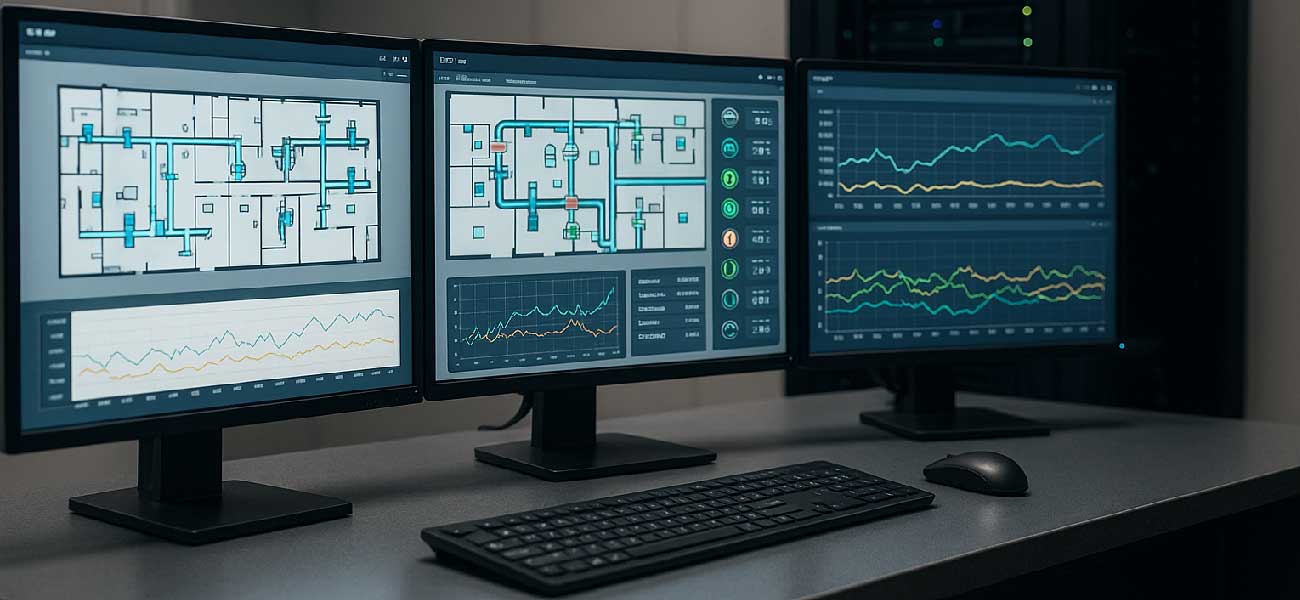
Building and industrial control networks are moving beyond proprietary silos toward open, interoperable platforms.
Modern BMS architectures combine BACnet/IP for equipment integration, Modbus/TCP for utility meters, and MQTT for event‑driven messaging between edge controllers and cloud analytics.
The big shift is semantic tagging—Brick/Haystack‑style metadata assigned to points and devices—so graphics, alarming, and analytics become portable across projects and vendors.
Edge controllers now blend DDC logic with data engineering: they normalize units, apply deadbands and hysteresis, and publish trends to a time‑series database with cryptographic timestamps.
Standardized REST/GraphQL APIs expose points to quality dashboards and CMMS, while role‑based access and read‑only mirrors separate operators from integrators.
The payoff is faster commissioning, easier vendor changes, and a single source of truth that supports continuous commissioning.
Designers are also adopting model‑based sequences of operation that are version‑controlled and testable.
Digital twins mirror equipment and spaces; simulated loads and fault injections validate logic before site deployment.
KPIs—ventilation effectiveness, coil ΔT, kW/ton, comfort indices—are calculated consistently across sites, enabling portfolio‑level benchmarking and targeted retrofits.
Open protocols plus semantic models turn a BMS from a graphics server into a data platform that outlives individual vendors and devices.


Related Posts