
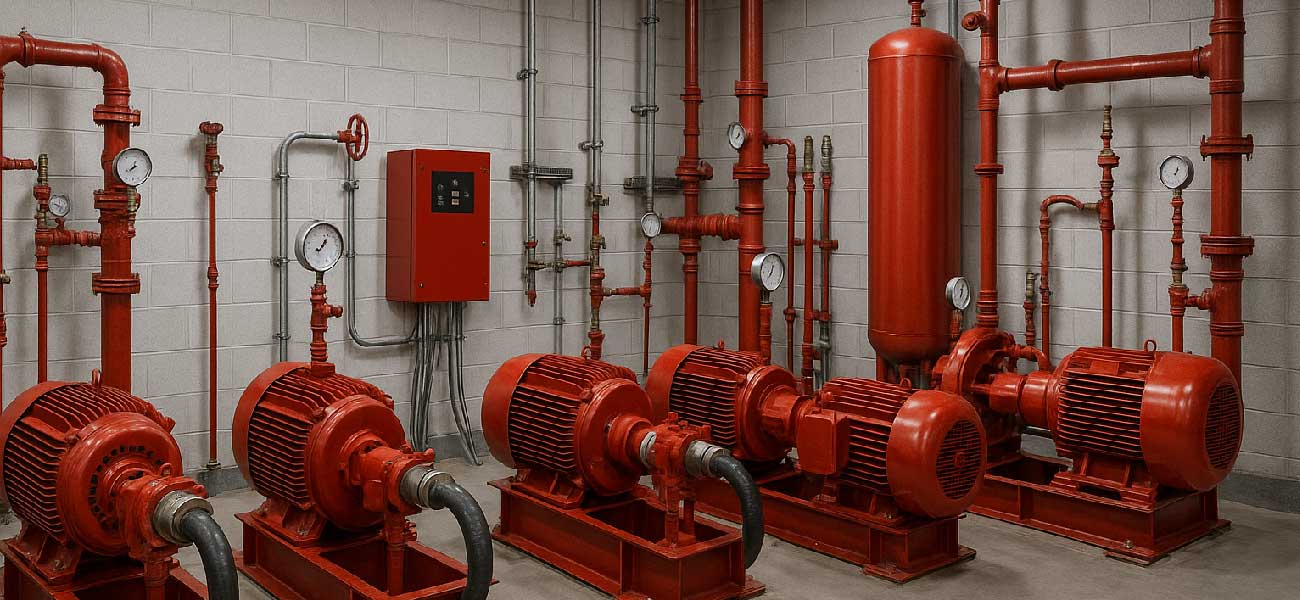
Industrial and large‑building fire protection is converging on robust, data‑visible pump rooms that meet NFPA 20 while simplifying operations. The latest electric fire pump controllers include listed variable‑speed pressure‑limiting control (VFD‑PLD) to hold discharge pressure under supply fluctuations, reducing the risk of over‑pressurizing downstream valves and sprinklers. Diesel drivers pair with modern emissions packages and integrated battery health monitoring to improve reliability during utility outages.
Hydraulically, best practice remains textbook: straight‑length suction, eccentric reducers flat‑on‑top, flood‑suction orientation, and independently valved test headers. Inline magnetic flowmeters on the test loop provide repeatable annual/acceptance flow tests without discharging to atmosphere where site constraints are tight. Jockey pumps maintain setpoint to prevent needless churn, while weekly no‑flow tests and monthly flow tests are now automated and trend‑logged.
Power resilience is addressed through dedicated feeders, automatic transfer switches, and selective coordination so upstream protection never trips the pump offline. Condition monitoring—bearing temperature, vibration, and seal leak detection—feeds the BMS for predictive alarms, and seismic bracing plus restrained risers protect the assembly in events. Clear wayfinding, minimum aisle widths, and illuminated signage turn the pump room into an auditable, safe workplace.
Commissioning focuses on curve validation (shutoff, 100%, 150%), controller sequencing, failure‑mode drills, and supervised valve status reporting into the fire alarm system. The outcome is a pump room that starts every time, delivers the required water at the required pressure, and provides the digital evidence authorities and insurers expect.
Related Posts