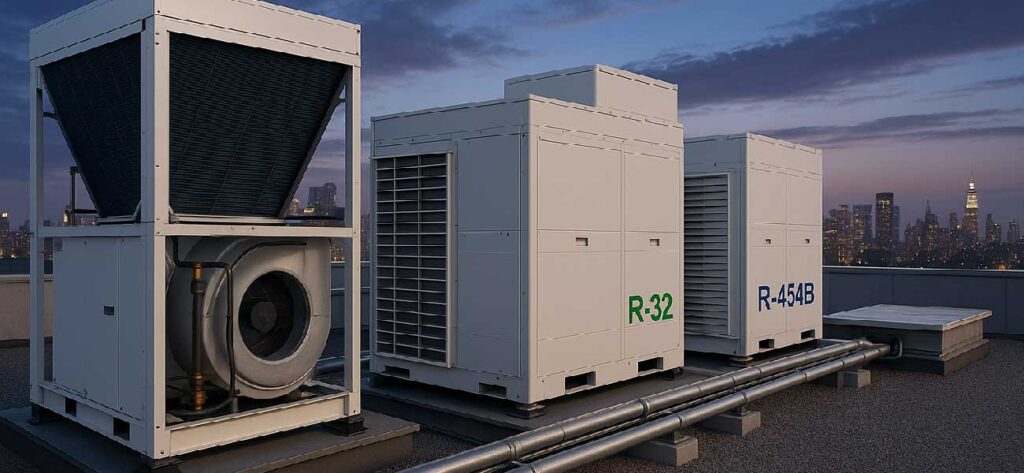

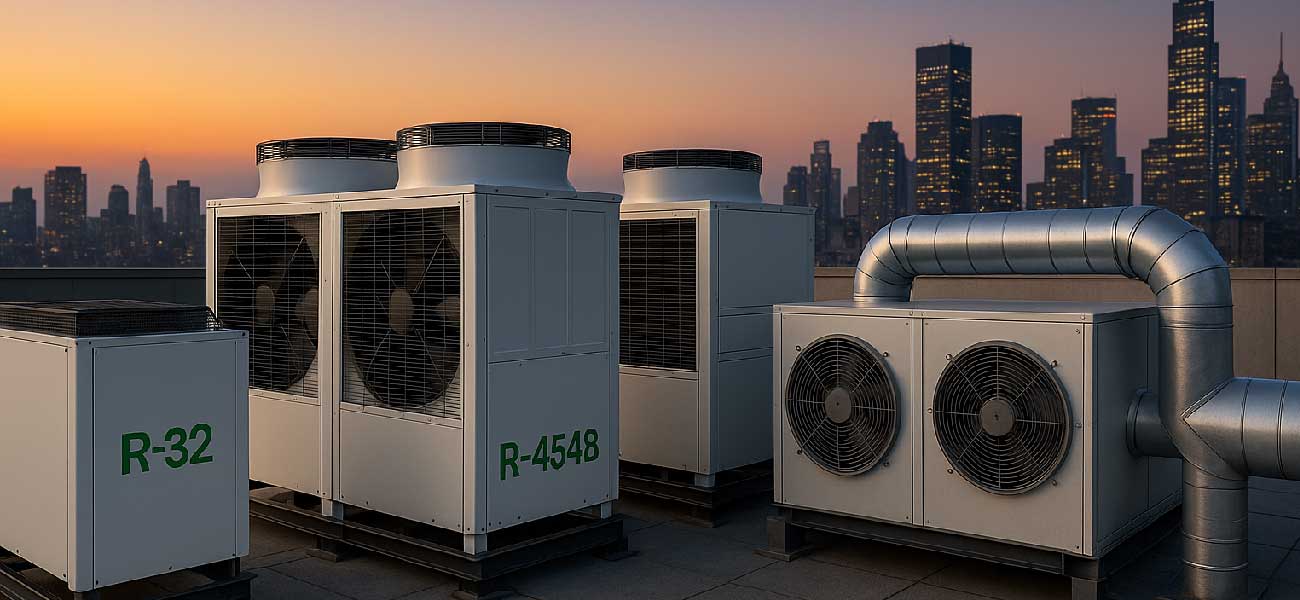
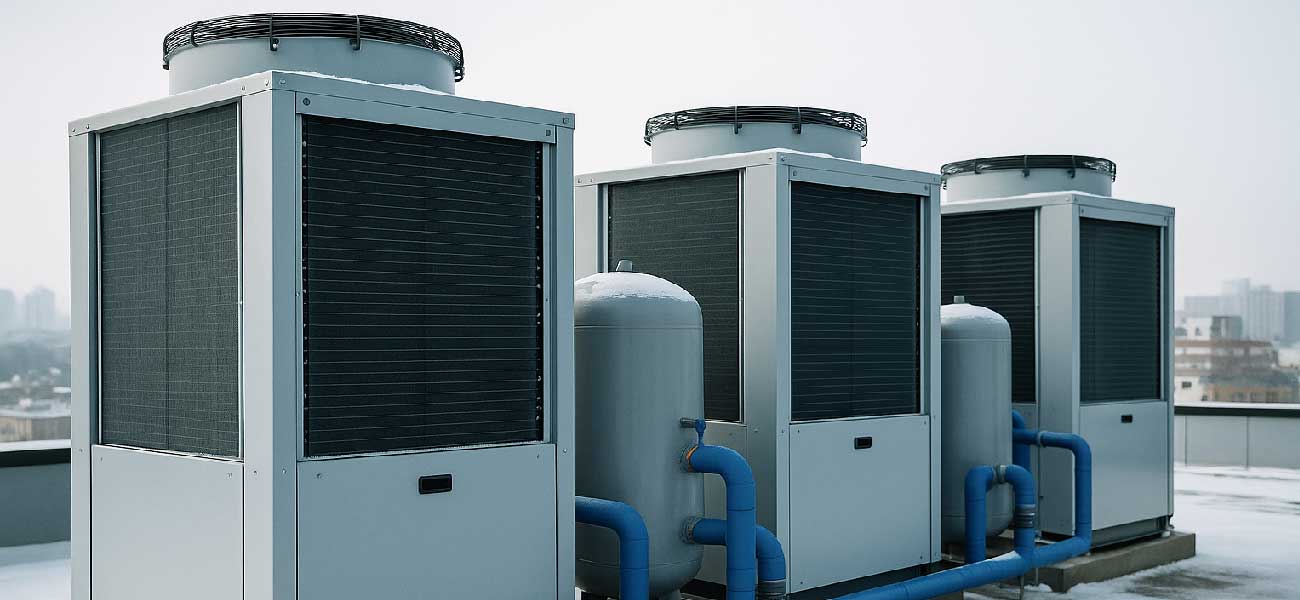
Electrification is redefining heating in factories and large buildings via industrial air‑to‑water and water‑to‑water heat pumps. New A2L‑refrigerant platforms achieve higher leaving‑water temperatures (65–80 °C) with robust capacity at part‑load and cold‑climate operation using vapor injection and adaptive defrost. For facilities with diverse temperature needs, hybrid plants pair heat pumps with condensing boilers: heat pumps serve base load at low temperatures, while boilers cover peaks or high‑grade processes. Thermal buffers and decouplers ensure each generator runs in its efficiency sweet spot.
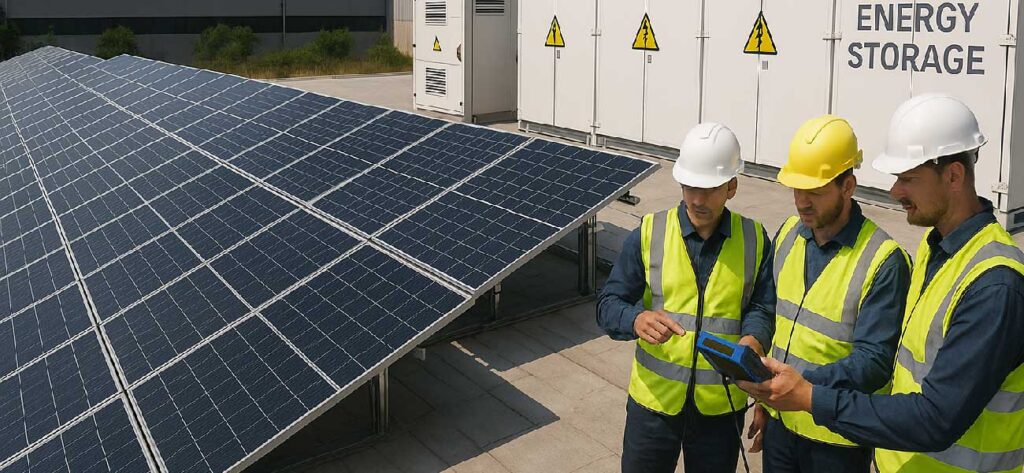
On the hydronic side, designers are embracing low‑lift distribution—larger coils, wider ΔT, and variable flow—to lower compressor work and pumping energy. Energy‑recovery opportunities abound: reclaim condenser heat from process cooling, integrate heat‑recovery chillers, or cascade heat pumps across temperature stages. Glycol management, frost protection, and acoustic design safeguard rooftop installations in dense urban settings. Electrical infrastructure planning—transformer capacity, breaker coordination, and demand‑response readiness—prevents hidden project risks as plants add substantial electrical loads.
Controls are pivotal. Weather‑reset curves for both heat pumps and boilers, priority logic, and occupancy‑/production‑aware scheduling keep supply temperatures just high enough. KPI dashboards track COP, kWh/ton‑heating, run hours, and cycling. With transparent metering and continuous commissioning, owners see double‑digit energy savings, lower carbon intensity, and quieter mechanical rooms—while maintaining safety, product quality, and resilience against fuel price volatility.
Related Posts