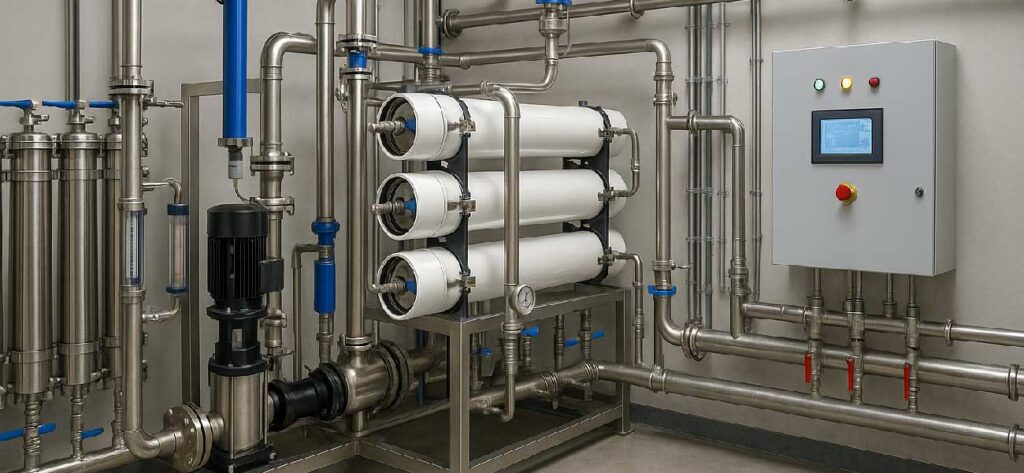


Industrial and large commercial facilities are rebuilding their ventilation strategies around ASHRAE Standard 241—Control of Infectious Aerosols—while keeping energy intensity under control. The new baseline is “clean‑air delivery” that is measured and auditable, rather than assumed. Engineers are combining MERV‑A 11–14 filtration, safety‑tested air cleaners, and right‑sized outdoor air with demand‑controlled ventilation (DCV) using calibrated CO₂ and pressure sensors.
On the airside, fans and air handlers are selected by Fan Energy Index (FEI) to minimize electrical input power at the design duty. Variable‑speed EC motors and smart VFDs enable stable flow at lower static pressure, which also reduces filter loading and sound. In high‑bay industrial halls, displacement or semi‑displacement supply paired with high‑volume, low‑speed (HVLS) fans improves mixing without over‑ventilating.
Commissioning now centers on TAB with witnessed sensor calibration, BMS alarming, and trending so that outdoor air, filter pressure drop, and clean‑air rates remain transparent to operators. Facilities are formalizing Building Readiness Plans, adding bypass modes for incident surge, and documenting response procedures. The outcome is measurable IAQ, lower risk of aerosol transmission, and lifecycle energy that aligns with decarbonization goals—without sacrificing worker comfort or process safety.

Related Posts