
Industrial and commercial heating is rapidly shifting to low‑temperature hydronics, where condensing boilers operate at return temperatures that unlock true condensing efficiency. The core objective is widening ΔT across coils and radiant circuits to move less water for the same heat, shrink pump energy, and keep flue gas dewpoints above condensing thresholds. Designs now prioritize right‑sized coils, lower supply setpoints (e.g., 55–65 °C), and precise two‑way valve control so return water consistently arrives cool. Primary‑secondary or variable‑primary pumping strategies stabilize flow while eliminating parasitic bypasses.
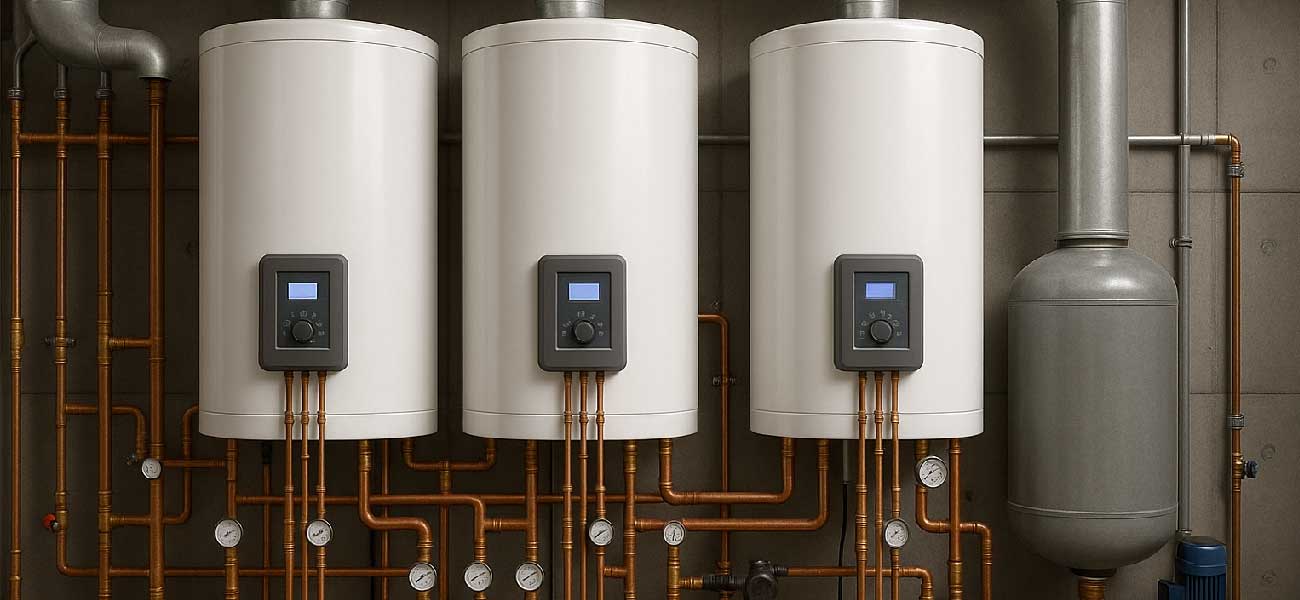
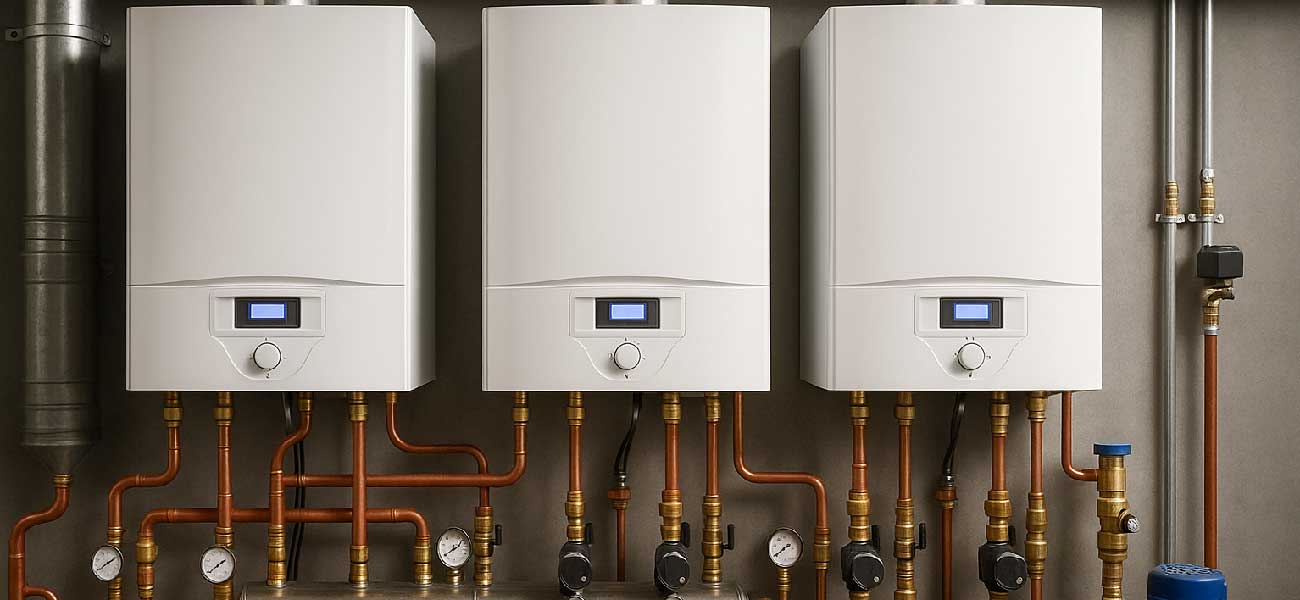
Modern condensing plants are packaged with stainless‑steel heat exchangers, modular sequencing, and O₂‑trimmed burners to maintain combustion efficiency across turndown. Balanced hydraulics—headers, low‑loss separators, pressure‑independent control valves—prevent hunting and ensure design ΔP at terminals. To avoid “short ΔT syndrome,” engineers instrument supply/return on every major branch and use BMS logic to flag coils with low temperature drop or valves stuck open. Where processes require higher grades of heat, high‑temperature circuits are decoupled via plate heat exchangers to protect boiler condensing conditions elsewhere.
Radiant heating and air‑handling reheat at low temperatures become straightforward within this framework, improving occupant comfort and enabling future electrification (heat pumps) without wholesale coil replacements. Commissioning emphasizes flushing, chemical treatment, air removal, and verified pump curves. With correct sensor placement and weather‑compensated reset, facilities see tangible reductions in gas and pump kWh while maintaining stable indoor temperatures and responsive control.
Related Posts