

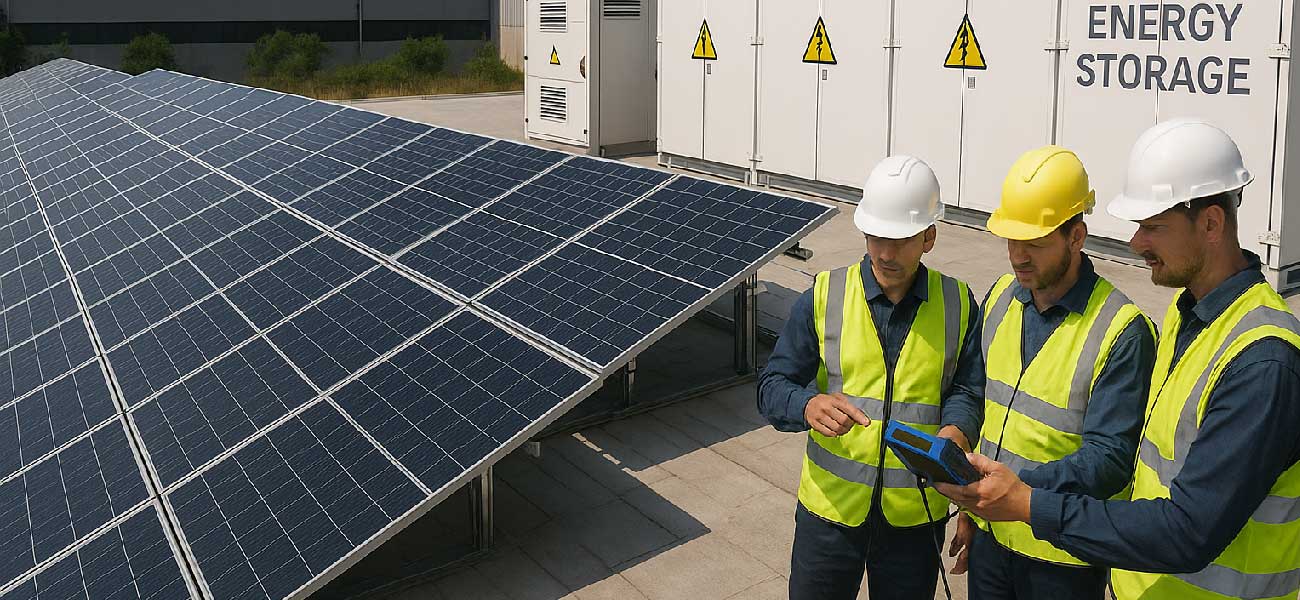
Decarbonization is reshaping electrical engineering in industry.
Plants are blending rooftop/ground PV, battery energy storage systems (BESS), and high‑efficiency variable‑speed drives, then orchestrating them through microgrid controllers.
The goal is to reduce peak demand and emissions while maintaining power quality and process stability.
Compliance with **IEEE 519** and local codes pushes the adoption of active harmonic filters, 12/18‑pulse rectifiers, and DC‑bus chokes in large VFD populations.
Reactive‑power control via STATCOMs or inverter‑based VAR support raises power factor and stabilizes voltage during disturbances.
Hybrid UPS with lithium‑ion batteries protect critical loads; ride‑through and black‑start strategies coordinate with the BESS so production lines keep running through short outages.
On the controls side, advanced demand response and load‑shedding schemes prioritize safety and product quality.
SCADA dashboards visualize feeder THD, phase unbalance, and flicker in real time, while PQ recorders capture sags/swells for utility disputes.
Energy‑aware scheduling—charging forklifts or thermal storage when PV output is high—turns the plant into a flexible grid participant.
The payoffs are measurable: lower energy intensity (kWh per unit), fewer power‑quality incidents, and a credible pathway to net‑zero targets without sacrificing reliability.

Related Posts